Before you rely on a consent
What to look for in a consent certificate
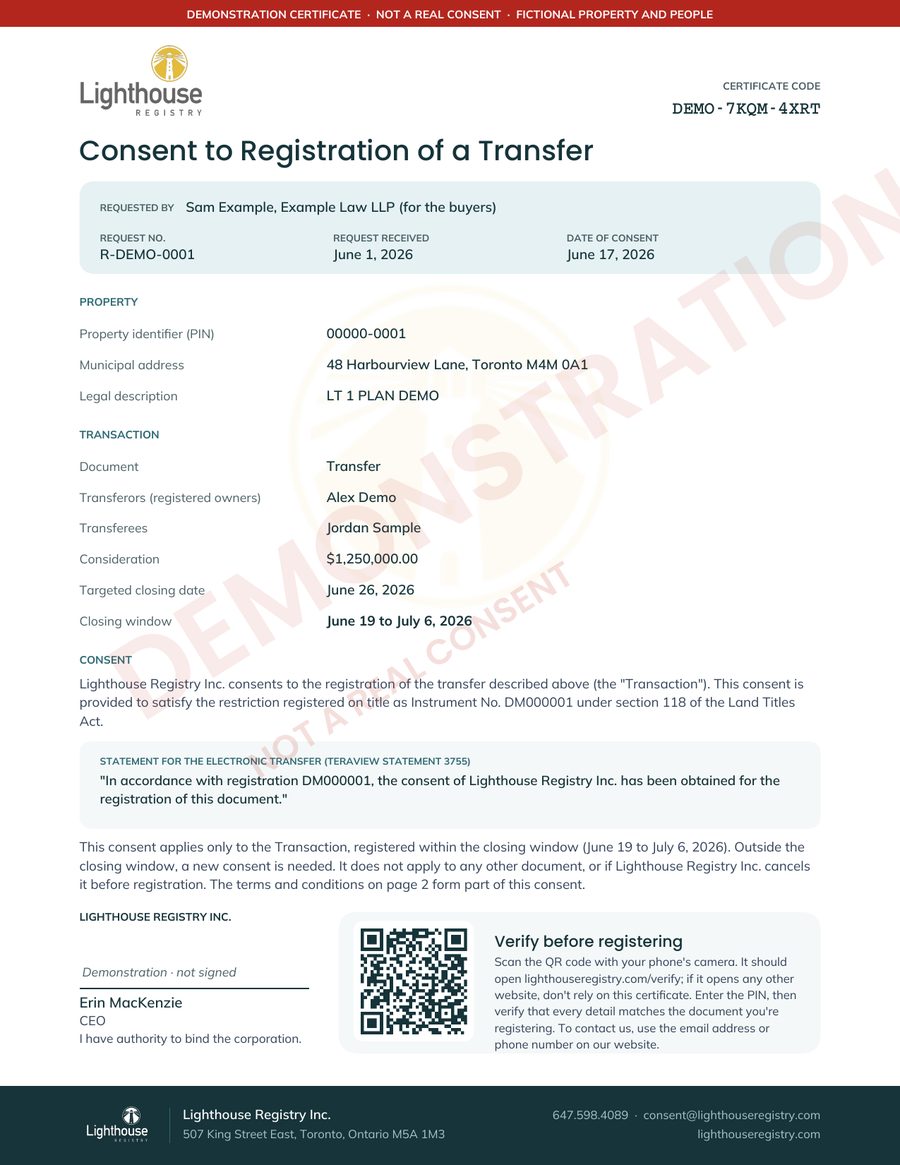
Every consent we issue is a consent certificate like the sample shown here. A certificate can be copied or altered, so how it looks is never proof that it is genuine. Always verify it with us before relying on it.
- It covers one transaction. A consent applies only to the property and the transaction it describes, registered within its closing window.
- Verify it on our real website. Go to lighthouseregistry.com/verify by typing the address yourself, or scan the QR code. Then check that the address bar reads https://lighthouseregistry.com, spelled exactly. A padlock alone isn’t enough: copycat websites have one too. Enter the certificate code and the property PIN.
- Every detail must match. Compare our record with the certificate and the document you’re registering, especially the parties, the amount and the dates.
- A verification record is not a consent. After verifying, you can print or save a record of the verification. It is marked “This is not a consent”: it shows only that a verification was done. The consent is the certificate itself.
 Tap to enlarge
If anything is different, or the certificate can’t be verified, don’t close the transaction. Contact us using the email address or phone number on this website, not those printed on the certificate.
Verify a consent certificate
Try it with a sample. Certificate code DEMO-7KQM-4XRT, PIN 00000-0001. Open the verify page with the sample code filled in →
Questions? Email consent@lighthouseregistry.com or call 647.598.4089.